
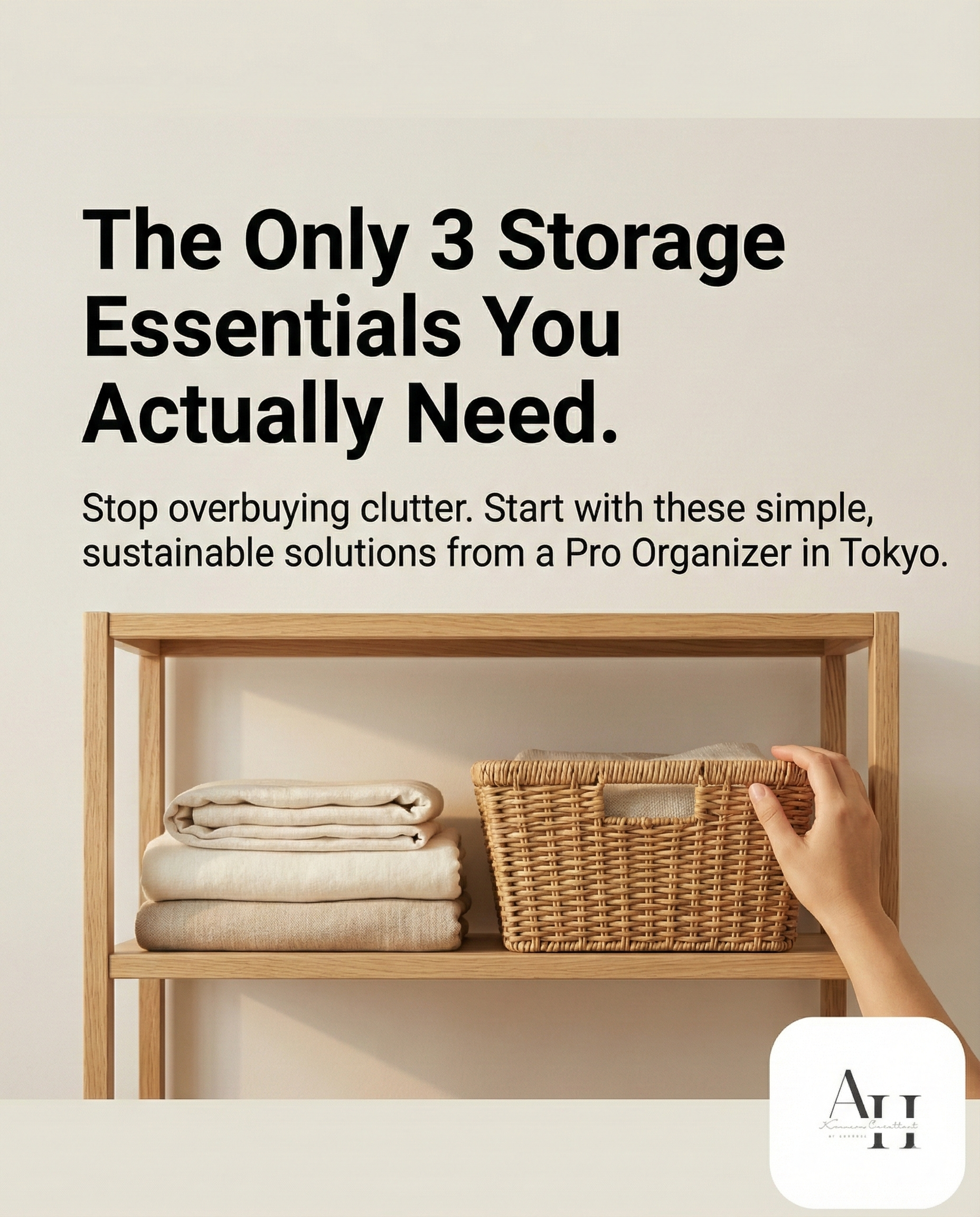
The Only 3 Storage Essentials You Actually Need (Tokyo Expat Edition)
If you’re living in Tokyo as an expat,
you already know the reality: storage is limited, closets are compact, and it’s easy to end up buying “organizers” that don’t fit your home or your lifestyle. Even worse, those organizers can become clutter themselves.
This post will help you stop overbuying and start organizing with a simple, sustainable system that works especially well in Tokyo apartments. You’ll learn three rules that professional organizers use to create storage that is practical, modular, and easy to maintain.
After you read this post you will get…
You’ll get a clear framework for organizing without wasting money on random containers. You’ll learn what to use immediately (for free), what to invest in once you’re ready, and where you should absolutely save money. If you’ve ever thought, “I need to buy storage before I can get organized,” this will flip that idea—in a good way.
Rule #1: Shop Your Home First
Before buying anything new, look around. The best organizers might already be in your house.
This rule is especially useful for expats because many households already have “hidden” organizing tools from moving to Japan: shipping boxes, sturdy packaging, reusable bags, and spare containers. These are perfect for testing a system before you commit to buying anything.
The best “zero-cost” organizers
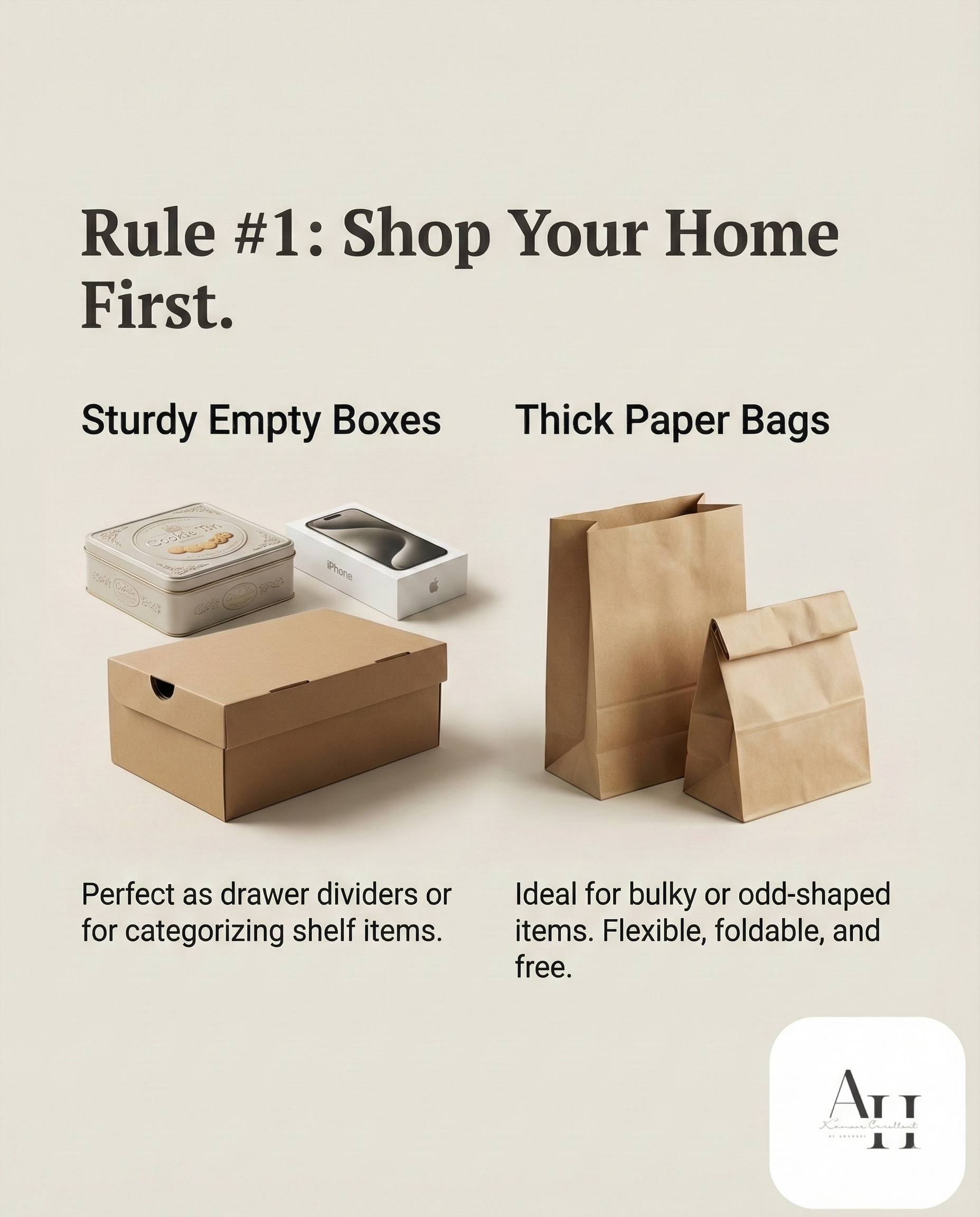
Sturdy empty boxes
Think iPhone boxes, shoe boxes, cookie tins, or delivery boxes. They work beautifully as temporary drawer dividers or shelf categories, especially while you’re sorting. They also help you create clear “zones” right away, which reduces decision fatigue.
Thick paper bags
Paper shopping bags are ideal for bulky or awkward items. They are flexible, foldable, and free. They’re also great for sorting into “donate,” “recycle,” “relocate,” and “decide later” categories while you tidy.
This is the key point: if a system doesn’t work with a free box, it won’t magically work with an expensive acrylic organizer. Test first. Then buy.
Rule #2: Invest in Timeless Basics
When you do buy, choose systems designed to last and adapt. Think standards like MUJI.
Tokyo homes change. People move frequently, room layouts vary, and storage spaces often have unusual dimensions. That’s why “timeless basics” beat trendy organizers. You want a core system that can move with you and still work.
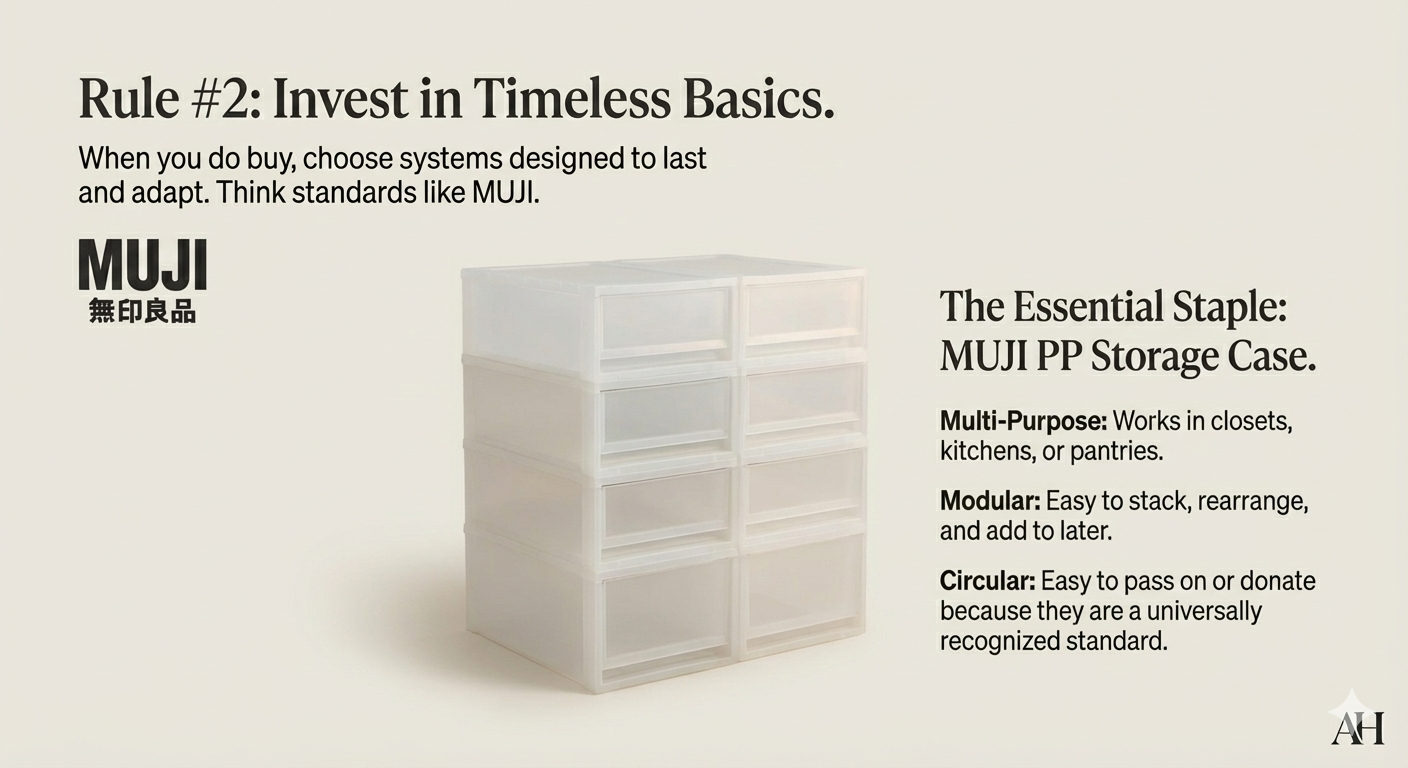
The essential staple: MUJI PP Storage Case
MUJI PP storage cases are one of the most versatile options in Japan.
Multi-purpose
They work in closets, kitchens, pantries, laundry areas, and entry storage.
Modular
They stack well, rearrange easily, and you can add more later without redesigning everything.
Circular
They’re easy to resell, donate, or pass on because they’re widely recognized and easy for others to reuse.
If you’re building a long-term “organizing baseline” in Japan, a modular standard like this will save you time and money for years.
Rule #3: Save on “Hidden” Storage
You don’t need expensive organizers inside drawers or boxes. This is where the 100-yen shop is your best friend.
Many expats overspend on inner dividers because the cute options are everywhere online. But the truth is simple: the inside of drawers does not need premium storage. It needs a repeatable, functional system.
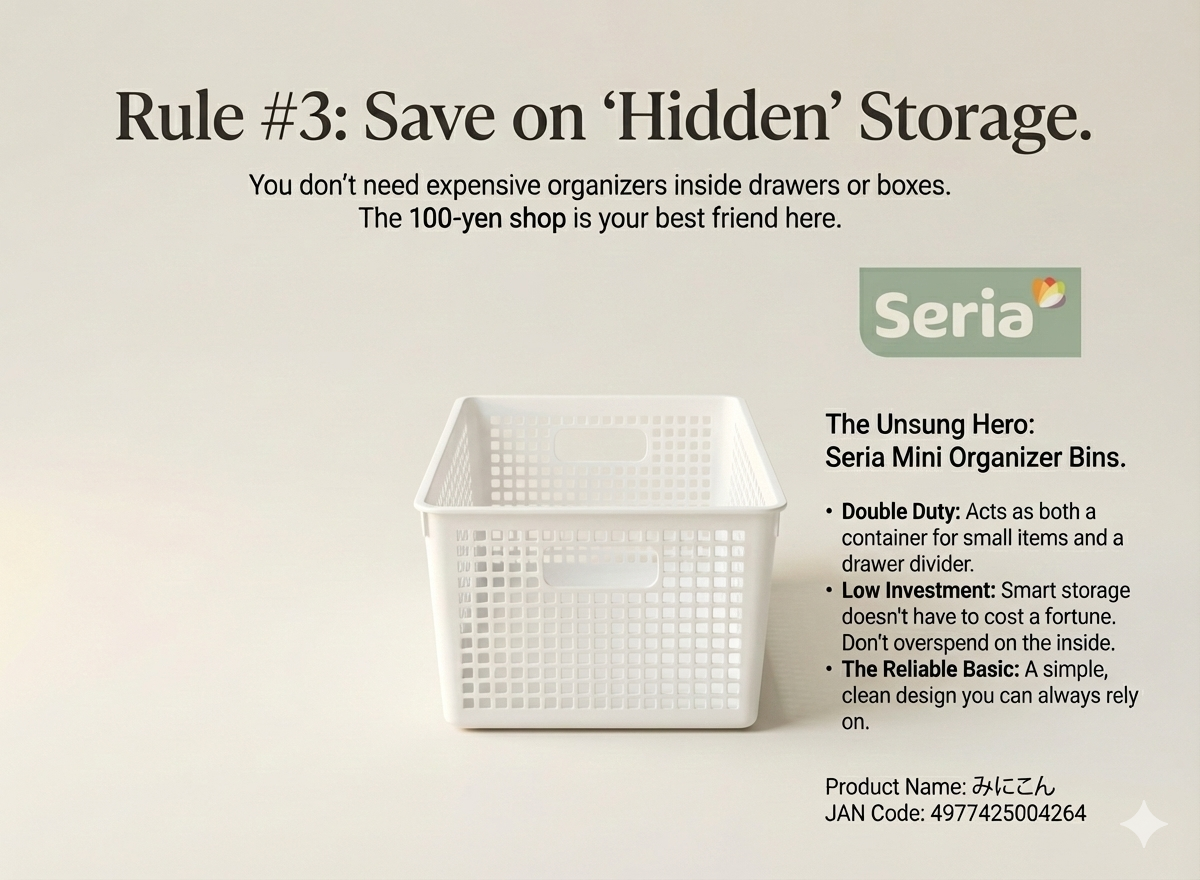
The unsung hero: Seria Mini Organizer Bins (“みにこん”)
These are excellent for small items like chargers, skincare, stationery, meds, tea bags, kitchen tools, socks, and accessories.
Double duty
They act as both a small-item container and a drawer divider.
Low investment
Smart storage doesn’t have to cost a fortune, especially where it’s hidden.
Reliable basic
They’re clean, minimal, and easy to repeat across your home.
If MUJI is your “outer framework,” Seria is your “inner precision.”
Now that you know the three rules…
The 3 storage essentials (Tokyo expat version)
If you want a simple baseline kit, it’s this:
1. Free boxes and paper bags to test and sort
2. A modular standard you can build around (like MUJI PP cases)
3. Low-cost inner dividers (like Seria minicons)
This combination gives you speed, flexibility, and a home that stays organized even when life gets busy.
Resources
MUJI (Japan): https://www.muji.com/jp/ja/store
Seria: https://www.seria-group.com/
DAISO: https://www.daiso-sangyo.co.jp/
Ready to organize your Tokyo home without overbuying?
If you want a clear plan for your specific space (and your specific lifestyle), book a free consultation with me. In 30 minutes on Zoom, we’ll identify your biggest pain points, decide what to prioritize, and map out the next steps so you can finally make progress.
