
What do I do with my things if I'm moving to a smaller place in Tokyo?
For each item, ask one question: do I really need this in my new life? Keep what you need, and let go of the rest. If the things you keep still don't fit, put the extra in storage. And make these choices before moving day, not after.
That is simple, but not easy. Before a move, you are already juggling work, paperwork, and family. Here is how to make it lighter, step by step.
How do I decide what to keep?
Think of your new home as a container. Once you know its size, the question changes. It is no longer "Should I keep this?" It becomes "Does this earn a place in my new home?"
Choose for the life you live now, and the life you want next. Many of our things were chosen for an older version of us. Children grow up. Work changes. Since COVID, many of us live differently. That is not a failure. It just means your things need to catch up.
The KonMari® Method puts it simply: keep what sparks joy. In other words, keep what feels right for you and for the life you want in your new home.
Two tips from my sessions:
Start with clothes. There is usually a lot of them, and they are easier to decide on than books or keepsakes. Quick wins make the next decisions faster.
Measure the closets. Look at the floor plan before you move. You won't know everything until you move in, but it helps you choose.
What if I want to keep something, but it doesn't fit?
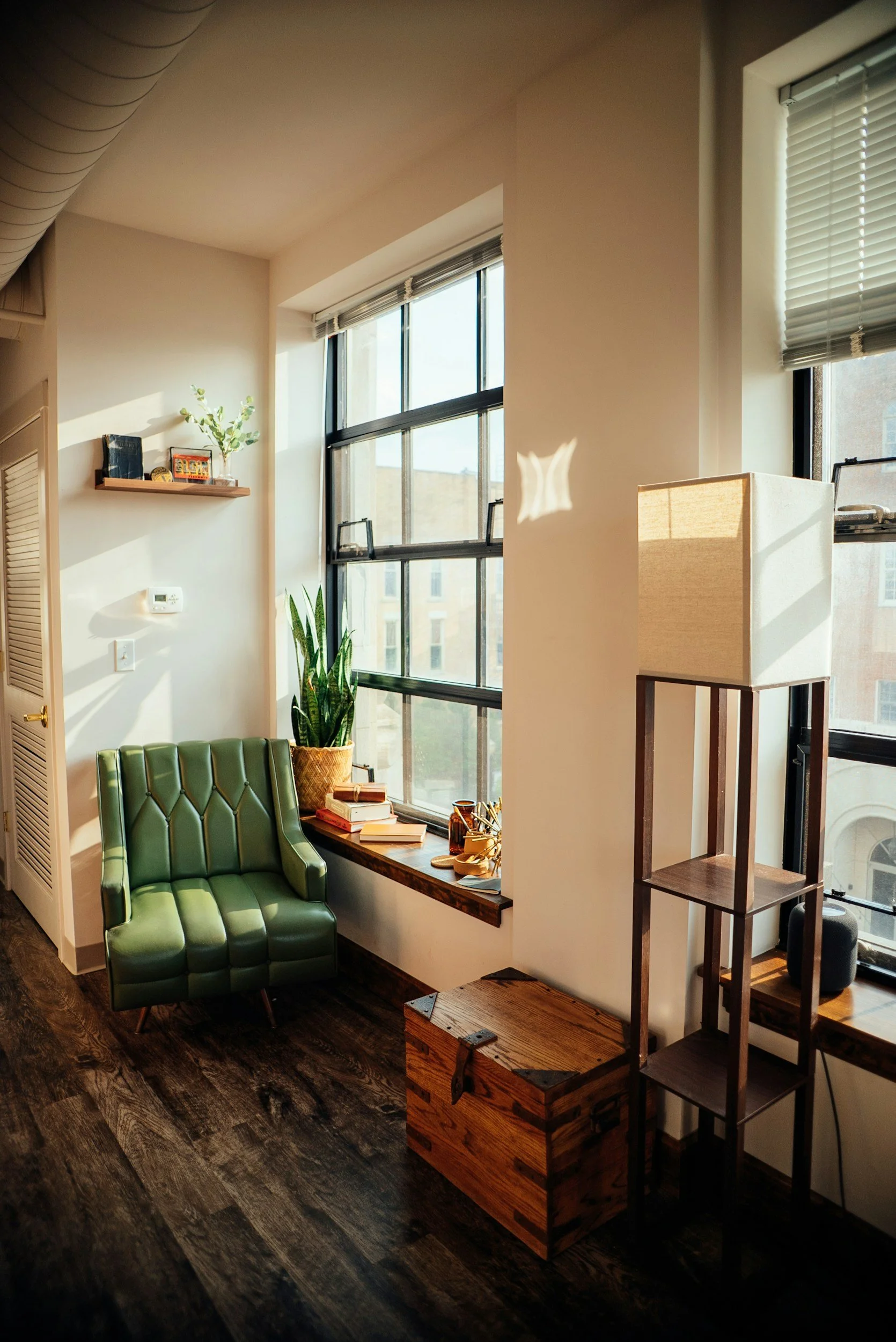
This spring I worked with a family moving into a home about a quarter smaller than their last one. They also had a holiday home, so some things went there: party tableware, part of a book collection they loved, and their child's big Lego collection.
If you don't have a second home, Tokyo has good storage options:
A rental storage unit (trunk room), or box storage. An indoor unit about the size of one tatami mat (around 1.6 m²) usually costs roughly ¥5,000 to ¥18,000 a month, depending on the area. If you only have a few boxes, a pick-up service like Summary Pocket can be easier. You pack a box, they collect it at your door, and on the standard plan the staff photograph each item so you can see what you stored in the app. It costs about ¥400 a month per box. The service is in Japanese only.
Your moving company's short-term storage. Useful if the new home isn't ready yet.
Wine and art storage. If you collect wine or art, I recommend Terrada Warehouse, a long-established storage company in Tokyo. It keeps wine and artwork at a steady temperature and humidity.
Before you store anything, ask: "When will I take this out, and where will it go then?" If there is no answer, storage only delays the decision, and you pay for it every month.
What if I really can't decide?
Some things are hard. For the family I mentioned, it was party goods and holiday decorations for Halloween and Christmas. They are used once or twice a year, so it is easy to say, "Let's keep it for now."
If letting go feels too worrying, keep it, without guilt. Just give it a deadline:
Pack it neatly in one box.
Put a note on the box, for example: "If I don't use this by next Christmas, I'll let it go."
When the date comes, open the box and decide.
Think of it as a small experiment. Often, by the time the date comes, the answer is clear.
And if your partner or children are not ready to let go, start with your own things. When they see the change, it often does more than asking.
Can my moving company handle all of this?
A lot of it. Large Tokyo movers offer full-service plans. They pack, move, unpack, and can store things for a while. Some also take away things you no longer need, so ask what is included.
In my experience, the premium plan of Sakai Moving Service, a major Japanese mover, even took items that people in Japan usually have blessed at a shrine or temple before throwing away, such as hina dolls (for Girls' Day) and samurai helmets (for Children's Day). They arranged the blessing, then disposed of them.
But movers can't decide what to keep. They pack what is there, including the box you haven't opened in five years. So finish your keep-or-let-go decisions by the day before the movers come. Otherwise, you pay to pack and move things you don't need. Where each box goes, you can work out with the movers on the day.
When should I start?
Earlier than you think. Once you move in, work, school, and daily life come back fast. Before the move, the deadline works in your favor.
A simple timeline:
3 to 6 months before: Start now if you are a family with children and busy schedules. Go one category at a time, beginning with clothes.
1 to 2 months before: Start by now at the latest, even if you live alone or in a small apartment.
At least 2 weeks before: Book large-item garbage collection with your ward. Read more in What should I get rid of before moving apartments in Tokyo?
The day before the movers come: Every keep-or-let-go decision is made.
After the move: Set up the new home so each thing has a place.
A smaller home can be a fresh start
Moving to a smaller place can feel like a loss. But it is also a chance to choose your things again, and keep only what fits the life you have now.
I work in person with families across central Tokyo, before and after a move, in English or Japanese. If you'd like help deciding what comes with you, I'd be glad to work through it with you. See how the program works.
